Parent Coming Home From Hospital and the Flat Isn't Ready: What to Clear First
By Junk Express Team
The discharge date is confirmed. Your parent is coming home — maybe with a wheelchair, maybe with a hospital bed, maybe both. And the bedroom they left three weeks ago still has the old queen bed pushed against the wall, a wardrobe that hasn't been opened in years, and boxes stacked along the corridor.
You don't need to clear the entire flat before they arrive. You need to clear the right parts of it.
What Has to Be Clear Before Your Parent Comes Home?
Think about the route your parent will actually travel every day, and work backwards from there.
The front door to the bedroom. A wheelchair needs a clear, straight run down the corridor. If your parent is walking with a frame, they still need space to plant it without catching on shoe racks, side tables, or stacked boxes. Measure the narrowest point of your corridor. If something is blocking it, that item goes first.
The bedroom itself. If a hospital bed is arriving, the old bed frame and mattress usually have to go. A single-size hospital bed with side rails takes up more usable floor space than people expect, and the caregiver needs room to stand on at least one side. A bulky wardrobe opposite the bed can make this impossible. Sometimes removing just the wardrobe doors is enough; sometimes the whole unit needs to go.
Bed to toilet. This short walk is the one your parent will make most often, sometimes at night, sometimes in a hurry. Every obstacle along it — a chest of drawers jutting into the hallway, a laundry rack, loose rugs — is a fall risk.
If the care team has told you what equipment is coming, plan the clearance around those exact dimensions. A powered wheelchair turning circle is wider than a manual one. A commode beside the bed changes the floor plan again.
How Do You Make Space for a Hospital Bed and Wheelchair?
The old mattress is usually the first thing out. A big mattress is awkward and heavy enough that two people struggle with it on a narrow landing. Our crew handles mattress removal regularly and knows how to angle one through a tight HDB corridor.
The bed frame follows. Then you can see how much floor space you actually have. In our experience, families are often surprised by how much room opens up once a single large piece of furniture is removed.
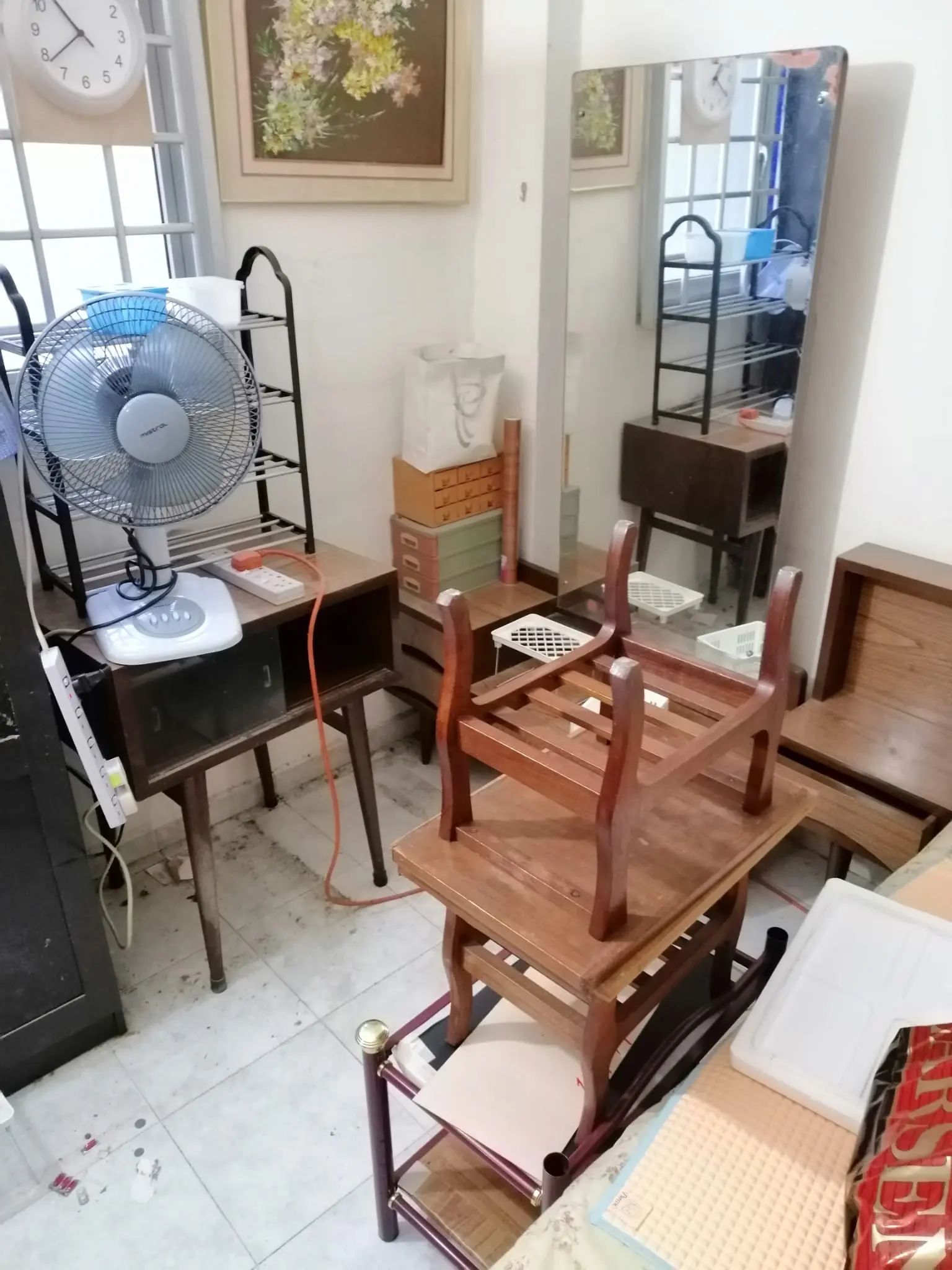
If a wheelchair needs to turn in the bedroom, it needs a lot more open floor than most people expect. It may mean the dressing table goes, or the bedside cabinet gets swapped for something narrower.
One thing worth noting: if your parent eventually recovers enough that the hospital bed is no longer needed, we handle hospital bed removal too. That's a future problem, but good to know the solution exists.
Can You Clear the Essentials Now and the Rest Later?
Yes. In fact, splitting the job into two visits often makes more sense.
The first visit focuses on the critical path: the entrance, the corridor, the bedroom, the route to the toilet. Get the big obstructions out — the bed, the wardrobe, maybe a heavy display cabinet blocking the hallway. This is the clearance that has a hard deadline tied to the discharge date.
The second visit handles everything else. The spare room full of old newspapers. The kitchen cabinets packed with appliances nobody uses. The storeroom. These can wait a week, two weeks, a month. There's no rush, and your parent may want a say in what stays and what goes once they're home and settled.
We've worked with families managing packed flats where decades of belongings had accumulated. A staged approach respects both the timeline and the person whose home it is.
Who Should Be at the Flat on Clearance Day?
Someone who knows what your parent wants to keep.
This matters more than people realise. A crew can move fast, but they shouldn't be making judgement calls about which walking stick is the favourite one or whether the wooden stool by the window is sentimental. If your parent can't be there, the family member who knows them best should be present to point and decide.
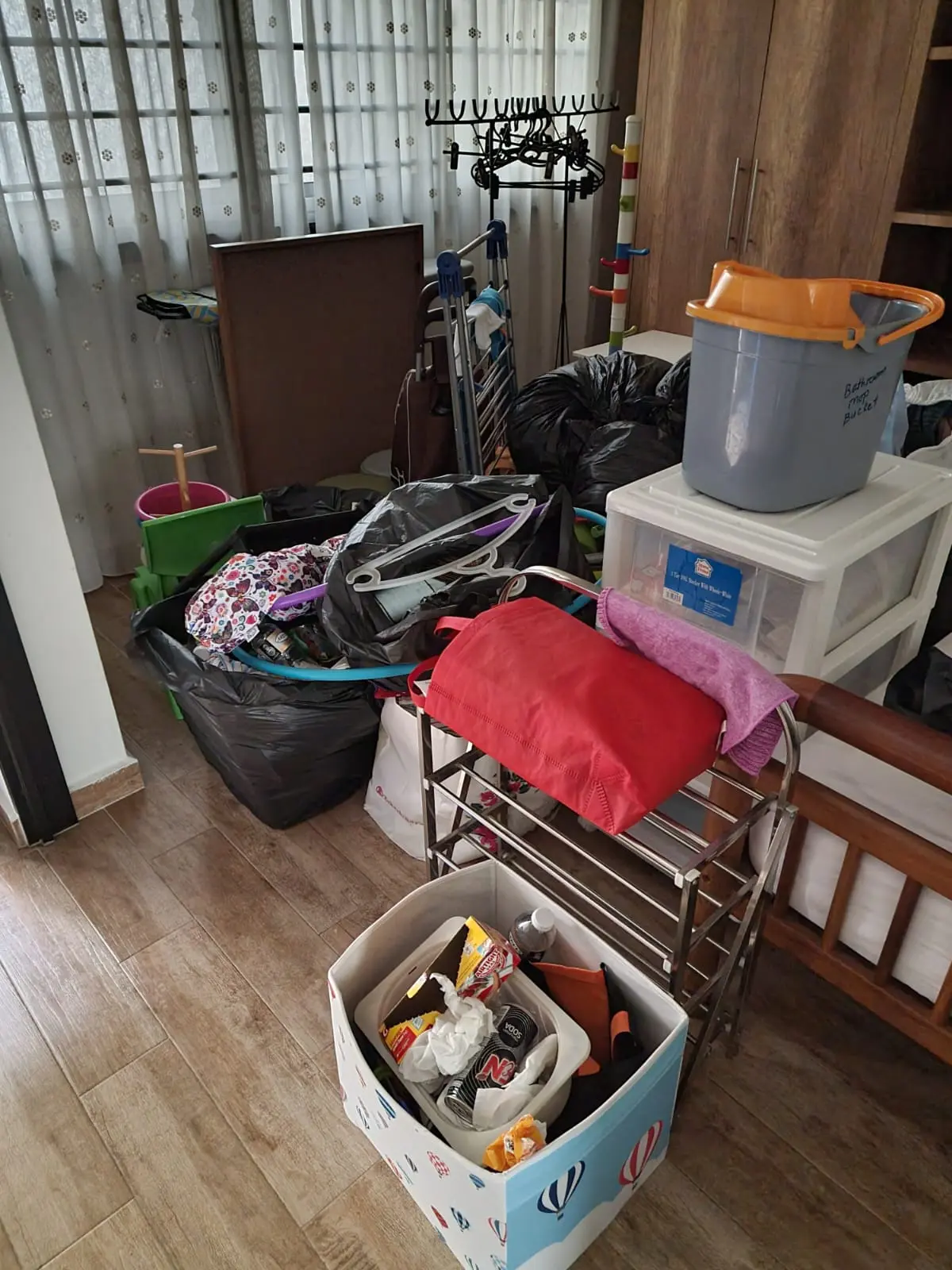
Fifteen minutes of sorting before the crew arrives saves time on the day. Group items into "goes" and "stays." If you're unsure about something, leave it. It can go on the second visit once your parent has weighed in.
What If It's a Condo?
Condo clearances add a layer of coordination that HDB jobs don't have. The owner or tenant needs to arrange a few things with building management before the day:
- MCST approval for the removal. Some condos require a written application or a refundable deposit.
- Service lift booking. Most condos restrict furniture moves to specific time slots using the service lift. Miss the slot and you're waiting for the next available one.
- Lift padding. Where the MCST requires protective padding in the service lift, building management provides it. Ask about it when you book the lift.
Book these early. If the discharge date is tight, call your management office the same day you confirm the hospital timeline. Our guide to service lift bookings covers what to expect.
For HDB flats, none of this applies. There's no service lift and no MCST. We use the standard passenger lifts and work around normal building access.
How Quickly Can It Be Done?
A focused clearance of one bedroom and a corridor — removing a bed frame, mattress, and one or two large furniture pieces — typically doesn't take long once the crew is on-site. The lead time is usually in the booking, not the job itself. With 24–48 hours' notice, we can often schedule around your discharge date.
Tighter timelines are possible subject to crew availability. After-hours work, Sundays, and public holidays carry surcharges, which we'll confirm upfront. No surprises on the day.
To get an accurate quote fast, send us photos of the items and the spaces involved via WhatsApp. Wide-angle shots of the corridor, the bedroom, and anything that needs to go. The clearer the photos, the faster and more accurate the quote. We've written a short guide on how to take photos that get you an accurate quote.
FAQs
Do you buy or offer trade-in value for the furniture you collect? No. We're a disposal service, not a buyback operation. There's no cash, credit, or trade-in value for items we remove. Usable pieces get a second life where possible, but there's no payment to the customer.
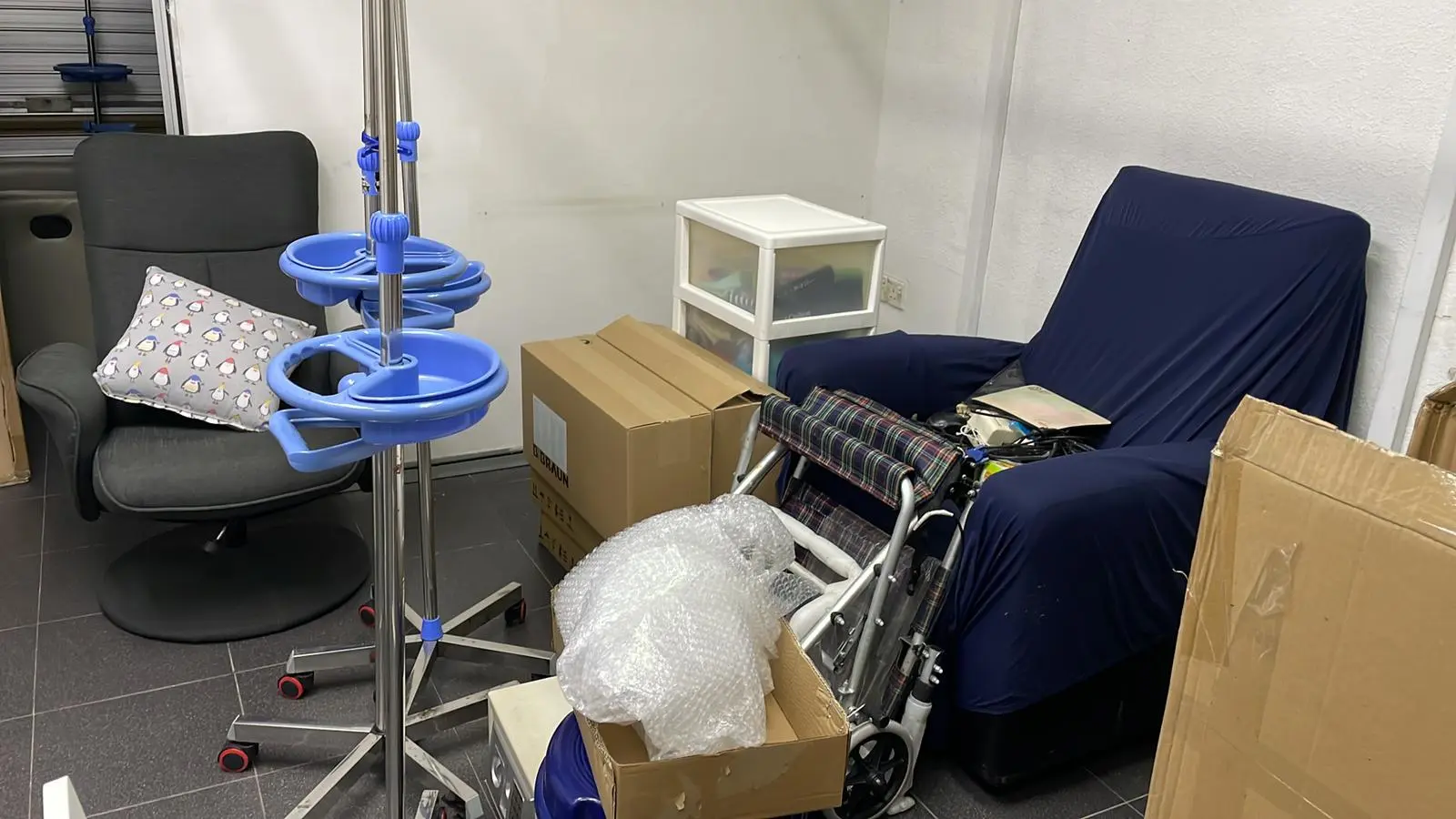
Can you remove a hospital bed and wheelchair alongside regular furniture? Yes. We handle hospital beds, wheelchairs, recliners, IV stands, and similar medical equipment alongside standard household furniture. It all goes in the same job if you need it to.
What if my parent might change their mind about some items? Keep anything they're unsure about aside for the second visit, when they're home and can decide in person. Nothing has to go on the first trip unless it's in the way.
Your parent's discharge date isn't moving. Plan the clearance around it.
Send us photos of the rooms that need clearing on WhatsApp at 9730 4047 — include the discharge date and what equipment is coming home. We'll get back to you with a quote so you can plan around the timeline that matters.